Salon Booking App: Do You Owe Apple a Cut?
A salon booking app usually does not pay Apple or Google a cut of the haircut. Both stores treat a service that happens in the real world, like a cut, a color or a massage, differently from digital goods. You can take card payments through your own processor instead of the store's in-app purchase system. The cut applies only to what you sell inside the app as digital content, such as a paid video course or a premium app tier.
Many salon owners hear about the store commission and drop the idea of a salon booking app. For most salons, that worry is misplaced. Here is the rule, the exceptions, and what they change about the build.
What Apple's rule says
Apple's App Review Guidelines cover this in section 3.1.3(e), "Goods and Services Outside of the App." In Apple's words, if your app lets people buy physical goods or services that will be consumed outside of the app, you must use purchase methods other than in-app purchase to collect those payments, such as Apple Pay or traditional credit card entry.
This runs opposite to what most owners expect. For a haircut, Apple does not merely allow another payment method. It requires one, so the haircut is not sold through in-app purchase.
A related rule, 3.1.3(d), covers real-time person-to-person services between two individuals. Apple's examples include tutoring, medical consultations and fitness training. One-to-few and one-to-many real-time services must still use in-app purchase. A one-on-one session with a stylist is the first kind. A paid live group class streamed inside the app is the second.
What Google Play says
Google's Payments policy lists cases where Google Play's billing system must not be used. Two of them are payments primarily for physical goods and payments primarily for physical services. Google's own examples of physical services include transportation, cleaning, gym memberships and tickets for live events. A haircut sits in the same family. That is the page's wording as of November 2026.
Where the cut does apply
The rules turn on where the customer uses the thing. A service in your chair is outside the cut. Content on their phone generally falls inside it. Three examples:
- Digital products sold in the app. A paid hair-care video library, a premium feature set or a members-only content area is consumed on the phone. Apple's in-app purchase rules cover it.
- Gift cards and prepaid credit. These are a gray area. Whether a stored balance for in-chair services counts as a service consumed outside the app is a call that Apple's reviewers make, so treat it as a question to settle before you build, not after rejection.
- A paid app download. Charging for the app itself is a store sale.
When Apple does take a cut, the rate can be lower than the standard one. Under the Small Business Program, developers with up to 1 million USD in proceeds in the prior calendar year get a reduced 15% commission on paid apps and in-app purchases. For the full picture of what each store charges, see our guide to app store fees in 2026.
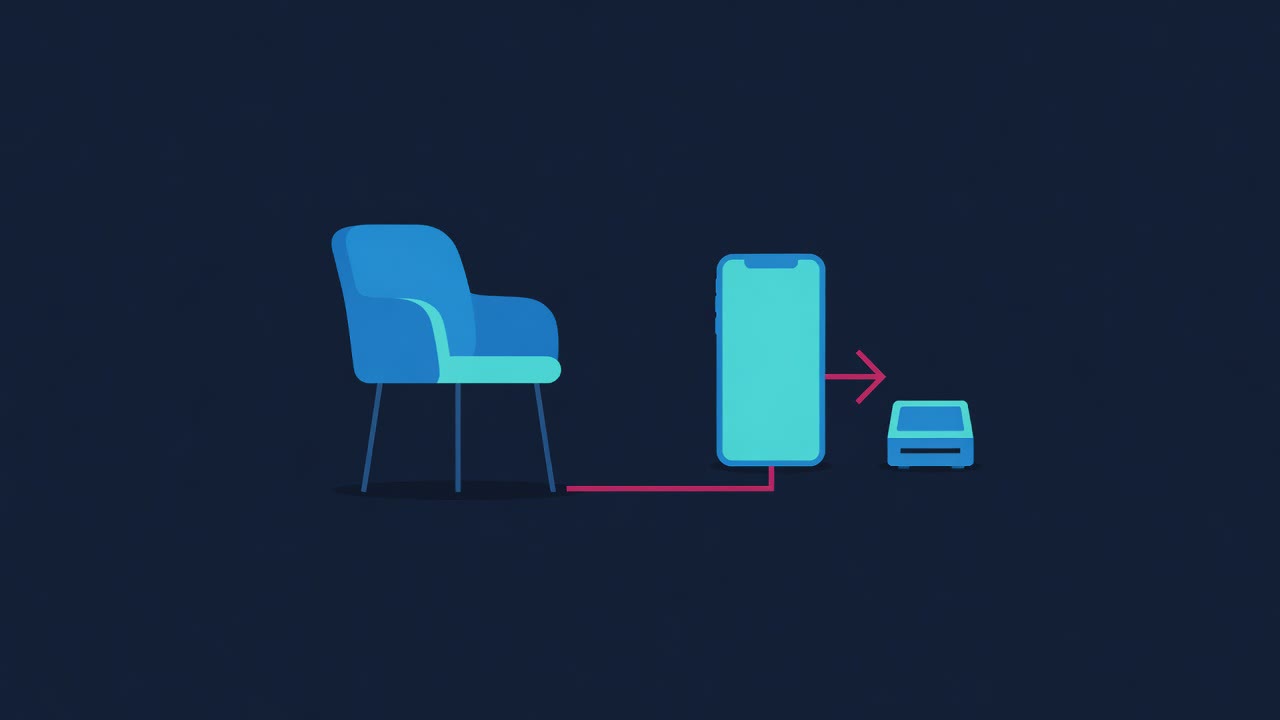
In-chair services follow the physical-services rule, so the payment path runs from the client to the salon.
What a salon booking app needs to build
Because haircuts are paid outside in-app purchase, your app needs its own payment path, and that is where much of the work sits. A salon booking app typically needs:
- A payment processor. You connect to a processor that handles cards and Apple Pay and Google Pay, so clients can pay or leave a deposit when they book. Processors charge their own fees, and rates change, so read the processor's pricing page on the day you decide.
- A deposit or no-show policy. A deposit is a product decision first and a payment feature second. Decide the amount and the cancellation window before anyone writes code.
- Staff calendars and availability. Each stylist has hours, breaks and services of different lengths. This is the part clients feel most when it is wrong.
- Reminders. Text or push reminders keep clients from forgetting, and they are cheap to add.
- Review readiness. Store review is a step you plan for, not an afterthought. Our guide to why apps get rejected covers the common causes.
Clients and stylists touch the calendars and reminders every day.
Where a custom app is the wrong call
If you are a solo stylist with a few dozen regulars, a ready-made scheduling service is almost always the better buy. It is already built, it is already in the store, and it costs a monthly fee rather than a project. A custom salon app starts to make sense when you have several locations or chairs, you want your own brand and client list instead of renting space in a marketplace, or you have a workflow no off-the-shelf tool handles well.
We cover the same comparison in booking app vs scheduling software. If a scheduling tool covers 90% of what you need, buy it and keep your money. We would rather tell you that on a call than build something you do not need.
If you take client health details, such as a skin condition or an allergy for a treatment, the privacy picture changes. See our post on HIPAA and booking apps for when that applies.
Three answers on paper settle most of the scope before any quote.
What to do next
Before you ask anyone for a quote, write down three things: whether you will sell any digital content in the app, whether you want deposits, and how many staff calendars you need. Those three answers decide most of the scope. The free app brief wizard turns them into a one-page brief you can hand to any developer. If you want a number for a build with those features, our booking app development page shows what we build, and a free intro call gets you a straight answer on whether you need us at all.
FAQ
Does a salon booking app have to use Apple in-app purchase?
No, for services consumed in the salon. Apple's guideline 3.1.3(e) says purchases of physical goods or services consumed outside the app must use payment methods other than in-app purchase. Digital content sold inside the app is different.
Can I charge a booking deposit in the app?
Yes, a deposit toward an in-person service is part of the service payment, so it follows the same rule. Confirm the wording with your developer before launch, since gift cards and prepaid balances are a gray area.
Is Apple's commission ever lower?
Yes. Apple's Small Business Program applies a 15% commission on paid apps and in-app purchases for developers with up to 1 million USD in proceeds in the prior calendar year.
Your app. In the stores. Done for you. US APP Team designs, builds, and launches your iOS and Android app for a fixed price. Start your app brief or book a free intro call — both are free.
Want to poke around first? Every tool in our free tool library runs in your browser with no signup: an app cost calculator, an app name generator, and a privacy policy generator.
